
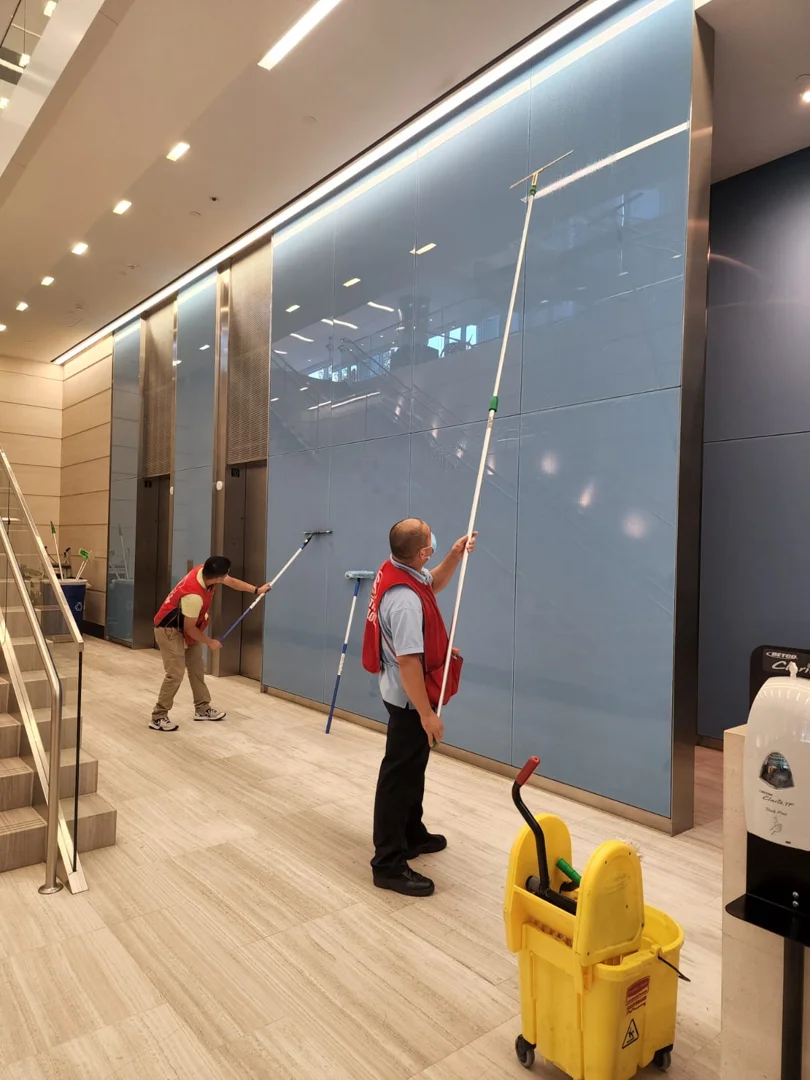
Why Cleaning Banks and Offices Requires a Security-First Plan
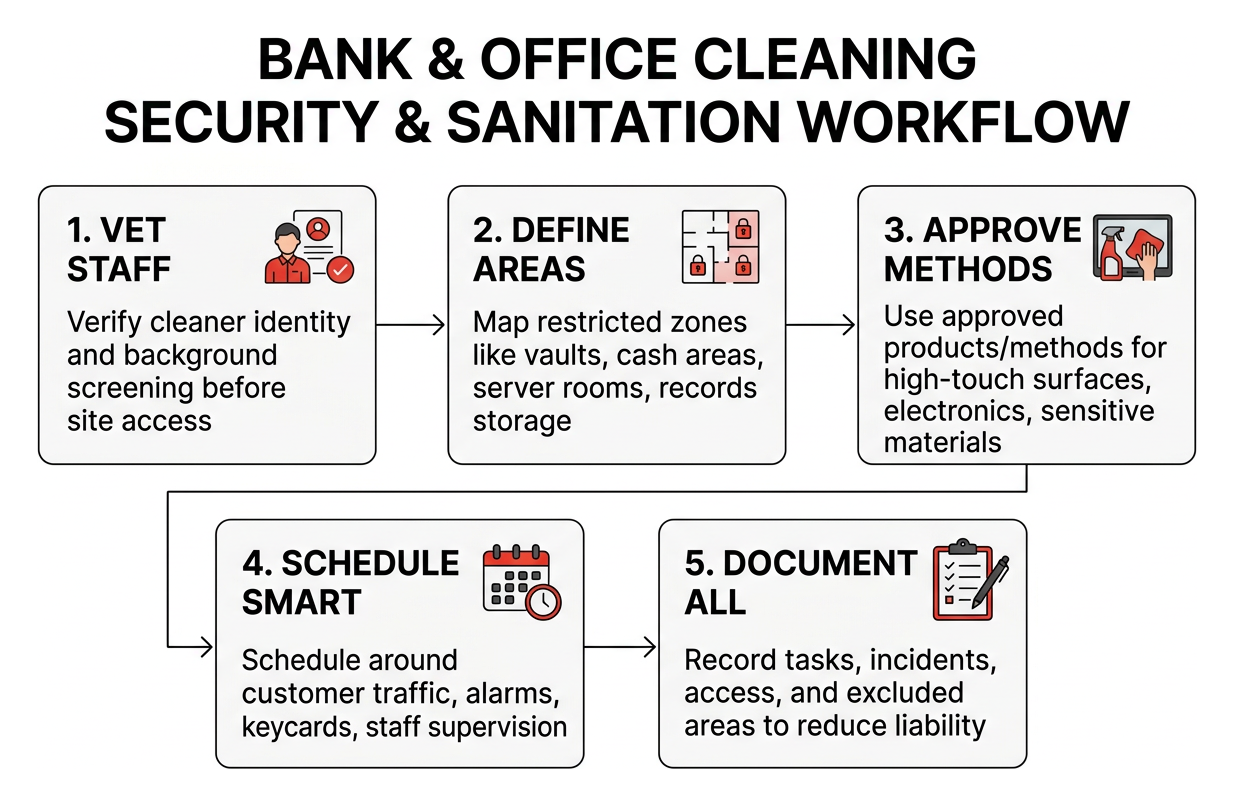
Cleaning banks and offices safely starts with a written scope, vetted staff, and clear access rules. Facility managers should require a provider to:
- Verify every cleaner’s identity and background screening before site access.
- Define restricted areas, such as vaults, cash-handling zones, server rooms, and records storage.
- Use approved products and methods for high-touch surfaces, sensitive electronics, glass, stone, and floors.
- Schedule cleaning around customer traffic, alarms, keycards, and staff supervision requirements.
- Document tasks, incidents, access, and excluded areas to protect the facility and reduce liability.
Bank branches have many of the same needs as corporate offices, including clean lobbies, restrooms, break rooms, and workstations. The difference is the risk: teller lines, transaction counters, ATMs, confidential records, and secure rooms demand tighter controls. A good cleaning plan keeps customer-facing spaces sanitary without placing cleaners near cash, sensitive data, or protected operations.
At Red Coats, we bring more than 60 years of commercial facility services experience to cleaning banks and offices, supporting complex workplaces across the DC metro area and Southeast. Our teams help facility leaders build dependable, accountable cleaning routines that meet both service and security expectations.
Quick cleaning banks and offices terms:
Standards for Cleaning Banks and Offices: Compliance, Security, and Sanitation
Maintaining a financial institution requires an entirely different operational mindset than servicing a standard administrative suite. While general corporate workspaces focus on aesthetic upkeep, dust control, and waste management, financial facilities balance visual polish with strict risk mitigation.
When facility managers hire certified commercial janitorial services, they are not merely contracting sanitation staff. They are welcoming third-party personnel into environments governed by federal privacy laws, strict asset protection mandates, and complex physical security architecture.
Adhering to proven workplace safety and compliance standards ensures that your janitorial program never compromises your physical security or data integrity.
Security Clearances and Federal Vetting Requirements
Federal regulations allow financial institutions to require comprehensive criminal background checks on all third-party service contractors before granting them building access. In banking environments, an unvetted vendor is an unacceptable institutional risk.
A comprehensive screening process for banking janitorial staff must include:
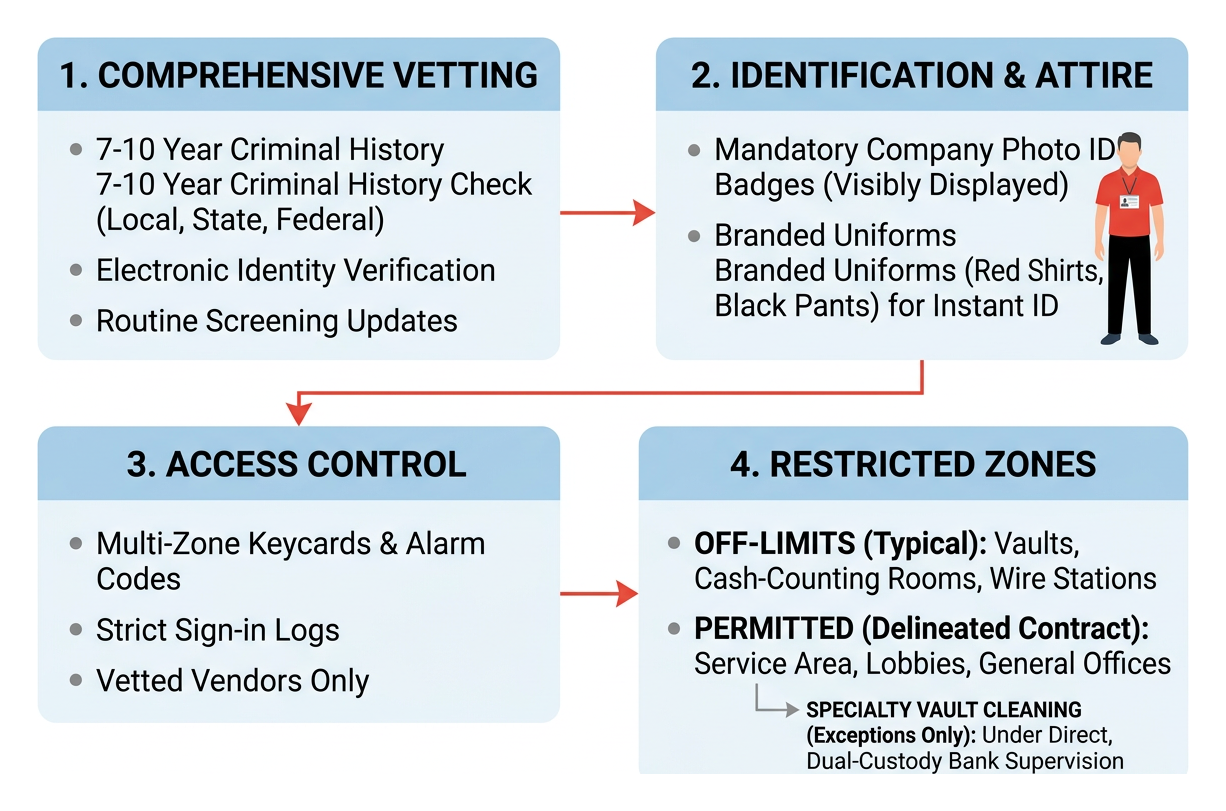
- 7-year to 10-year criminal history checks across local, state, and federal databases.
- Comprehensive identity verification through electronic verification systems.
- Routine screening updates and active employment re-verifications.
- Mandatory issuance of company-branded photo identification badges that must remain visibly displayed on uniform shirts at all times.
- Uniform policies requiring branded workwear (such as red shirts and black pants) so branch staff and surveillance operators can instantly identify authorized personnel.
Facility directors must demand that their cleaning partners provide clear vetting documentation for every technician assigned to their branch network.
Restricted Zones and Vault Protocol Management
One of the most critical aspects of banking janitorial agreements is identifying off-limits security zones. To protect both the client and the cleaning vendor from liability, the service contract must clearly delineate where cleaning crews can and cannot operate.
Safe deposit vaults, main branch vaults, cash-counting rooms, and wire-transfer stations are typically off-limits to unescorted commercial cleaning teams. In most banking agreements, standard custodial scopes exclude the interior of vaults entirely. If deep cleaning of vault floors or heavy vault door hardware is ever required, it must be performed under direct, dual-custody supervision by bank security officers or designated branch managers.
Establishing documented operational perimeters prevents accidental alarms, protects customer confidentiality, and aligns with general OSHA commercial facility standards for workplace security and employee safety.
Critical Cleaning Zones Across Financial and Corporate Workspaces
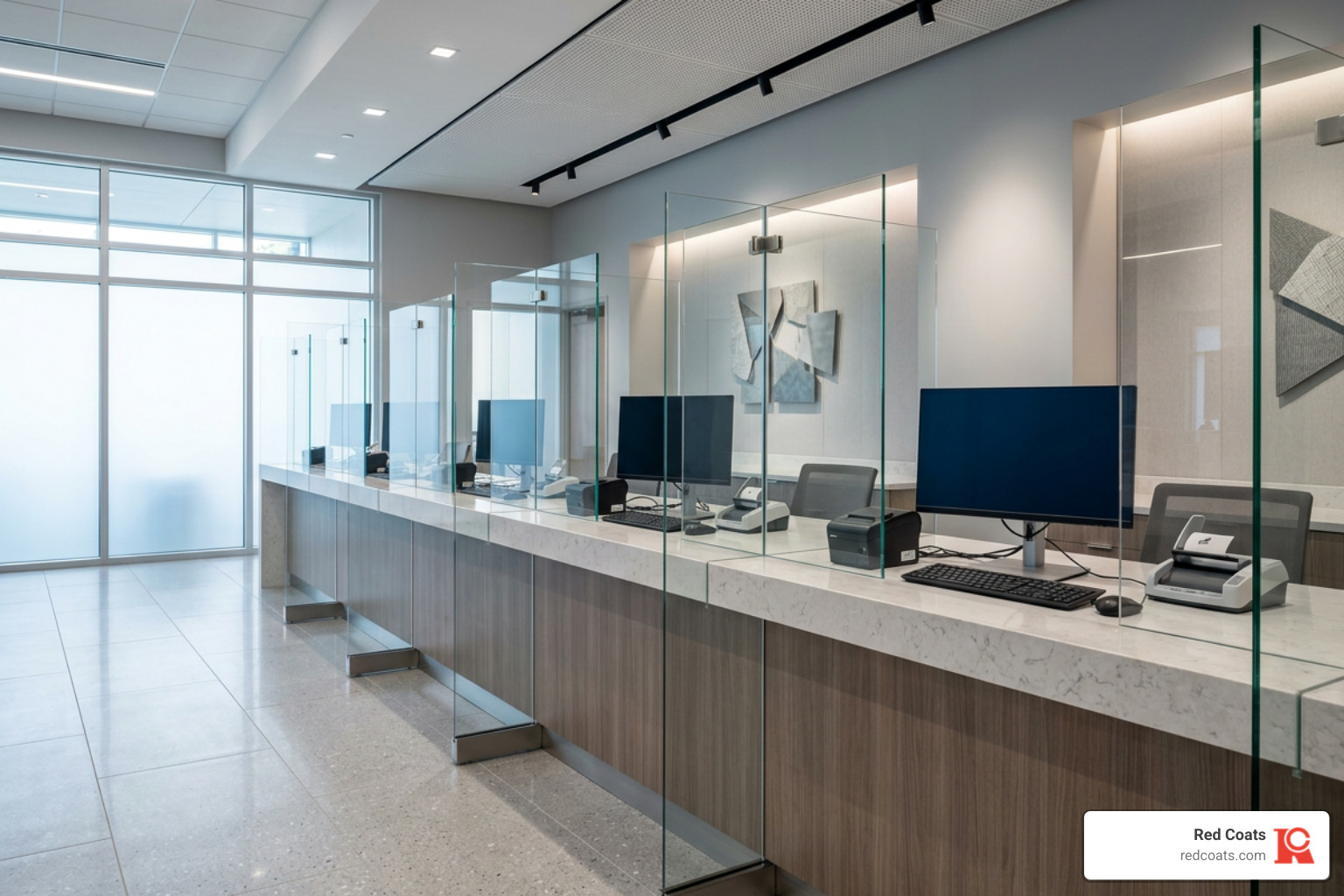
Every square foot of a financial facility conveys a message about the institution’s stability, trustworthiness, and attention to detail. A smudged glass partition or a dusty transaction station can undermine a customer’s confidence before they even reach the teller window. Implementing proper office disinfection protocols maintains the professional aesthetic your clients expect while keeping staff healthy and productive.
High-Traffic Teller Counters and Customer Touchpoints
Customer transaction zones see hundreds of physical interactions every business day. Each visitor leaves behind skin oils, dust, and microscopic pathogens on shared surfaces.
Key high-traffic touchpoints require deliberate cleaning techniques:
- ATM Touchscreens and Keypads: These sensitive electronic interfaces must be sanitized using non-abrasive, lint-free microfiber cloths dampened with electronics-safe disinfectants. Spraying liquids directly onto keypads or touchscreens can short-circuit the components or damage internal hardware.
- Teller Counters and Customer Check Writing Desks: Transaction surfaces collect heavy deposits of pen ink, rubber band residue, and surface oils. Custodial teams must utilize pH-neutral cleaners that sanitize the surface without stripping wood finishes or degrading natural stone counters.
- Bullet-Resistant Acrylic and Glass Partitions: Teller window barriers require non-ammonia, non-abrasive cleaners. Standard window solutions containing harsh solvents or ammonia can permanently cloud, haze, or scratch acrylic security glazing.
- Queue Stanchions and Check-In Kiosks: Metal posts, velvet rope hardware, and digital tablet displays must be wiped down nightly to remove fingerprints and smudges.
Following recognized CDC environmental cleaning guidelines ensures that these high-contact areas are safely disinfected without damaging high-value architectural installations.
Executive Boardrooms and Sensitive Data Areas
While teller counters face the public, corporate boardrooms, private loan offices, and financial advisory suites handle high-value negotiations and confidential documentation.
Cleaners operating in these executive environments must be trained to recognize and respect sensitive financial data. Clean desk policies require custodial staff to clean around paperwork left on desks without shifting, flipping, or browsing documents.
In server rooms and dedicated IT equipment closets, standard custodial tools like upright vacuum sweepers and feather dusters represent a static electricity risk. Technicians must use specialized HEPA-filtered vacuums with anti-static attachments to remove dust without generating static discharge that could harm sensitive servers. Understanding why commercial facilities require specialized routines helps facility executives choose providers capable of protecting expensive financial technology.
Essential Operational Strategies for Facility Managers
Managing the janitorial operations of multiple branch locations or a multi-tenant financial tower requires structured workflows, transparent communication, and strict operational oversight.
Scope Checklists for Cleaning Banks and Offices in Secure Facilities
A well-structured cleaning scope prevents missed tasks and eliminates misunderstandings between bank administrators and service providers. When choosing professional commercial cleaning partners, confirm that their standard operational checklists cover the distinct operational zones of your branches.
Daily Sanitation Routine
- Empty all public and private office waste bins, replace liners, and place confidential shredding bins in designated secure zones.
- Disinfect lobby entry door handles, interior glass push plates, and vestibule surfaces.
- Clean and sanitize customer check-writing stations, pens, and queue dividers.
- Sanitize ATM exterior housings, touchscreens, and physical keypads.
- Clean interior partition glass, teller counter barriers, and reception desk glass.
- Disinfect all high-touch surfaces in customer and employee restrooms, restocking paper products and soap.
- Vacuum high-traffic entryway mats, lobby carpets, and teller line runners using certified HEPA equipment.
- Damp-mop hard surface floors with neutral cleaning agents.
Weekly and Periodic Maintenance Tasks
- Deep clean and polish natural stone lobby flooring, terrazzo, or decorative marble surfaces.
- Dust high architectural ledges, HVAC return vents, and decorative lighting fixtures.
- Wipe down baseboards, executive wooden office furniture, and conference room credenzas.
- Clean interior perimeter windows, glass conference room enclosures, and entryway sidelights.
- Sanitize employee break room appliances, refrigerators, sinks, and seating areas.
Frequently Asked Questions About Cleaning Financial Institutions
Are third-party cleaners allowed inside bank vaults?
In almost all commercial banking operations, third-party cleaning technicians are strictly prohibited from entering bank vaults unaccompanied. Main branch vaults, cash processing cages, and safety deposit areas are high-security zones governed by internal banking controls.
If custodial work is required inside a vault (such as restorative floor care or dusting safety deposit box facades), it must be scheduled during daylight hours under the continuous, dual-custody supervision of authorized bank security officers. Clear contract terms should list vaults as excluded areas to eliminate liability for the property manager and the janitorial provider.
What background checks are required for financial institution cleaners?
Financial institutions operate under federal regulatory frameworks that permit and encourage comprehensive vetting of third-party vendors. At a minimum, cleaners assigned to bank branches and financial offices must undergo:
- State and nationwide criminal history searches covering felony and misdemeanor convictions.
- Social Security number validation and identity authentication.
- Federal database screening for financial-related offenses.
- Verification of legal authorization to work.
Reviewing commercial cleaning partner vetting standards helps facility managers verify that their service provider enforces thorough screening protocols before any cleaner enters their premises.
How often should high-touch banking areas be sanitized?
High-traffic contact surfaces in banking branches, especially ATM keypads, teller counters, check-writing desks, and door hardware, should be sanitized at least once daily during standard evening janitorial operations.
For high-volume retail bank locations, integrating a daytime porter service is strongly recommended. A day porter continuously monitors the customer lobby throughout peak banking hours, wiping down transaction counters between rushes, sanitizing ATM terminals, removing smudges from entry doors, and maintaining spotless public restrooms.
Conclusion
Securing dependable, security-compliant janitorial operations is essential for property managers and facility executives overseeing financial spaces. Maintaining a spotless environment elevates your brand reputation while strict adherence to background screening, key control, and restricted-zone boundaries keeps your facility secure.
At Red Coats, we deliver tailored janitorial programs built on accountability, urgent service delivery, and comprehensive quality control. Global Care is our Green Seal GS-42 Certified Cleaning Program, designed to comply with standards established by the U.S. Green Building Council (USGBC), and it has helped clients obtain LEED, Fitwel, and WELL certifications for their properties.
Whether you manage a regional credit union, a commercial banking high-rise, or a portfolio of corporate offices across Maryland, Virginia, Washington DC, North Carolina, South Carolina, Florida, or Texas, our experienced teams are ready to support your properties. Explore our customized corporate and financial facility services to build a safe, compliant cleaning program for your buildings today.