
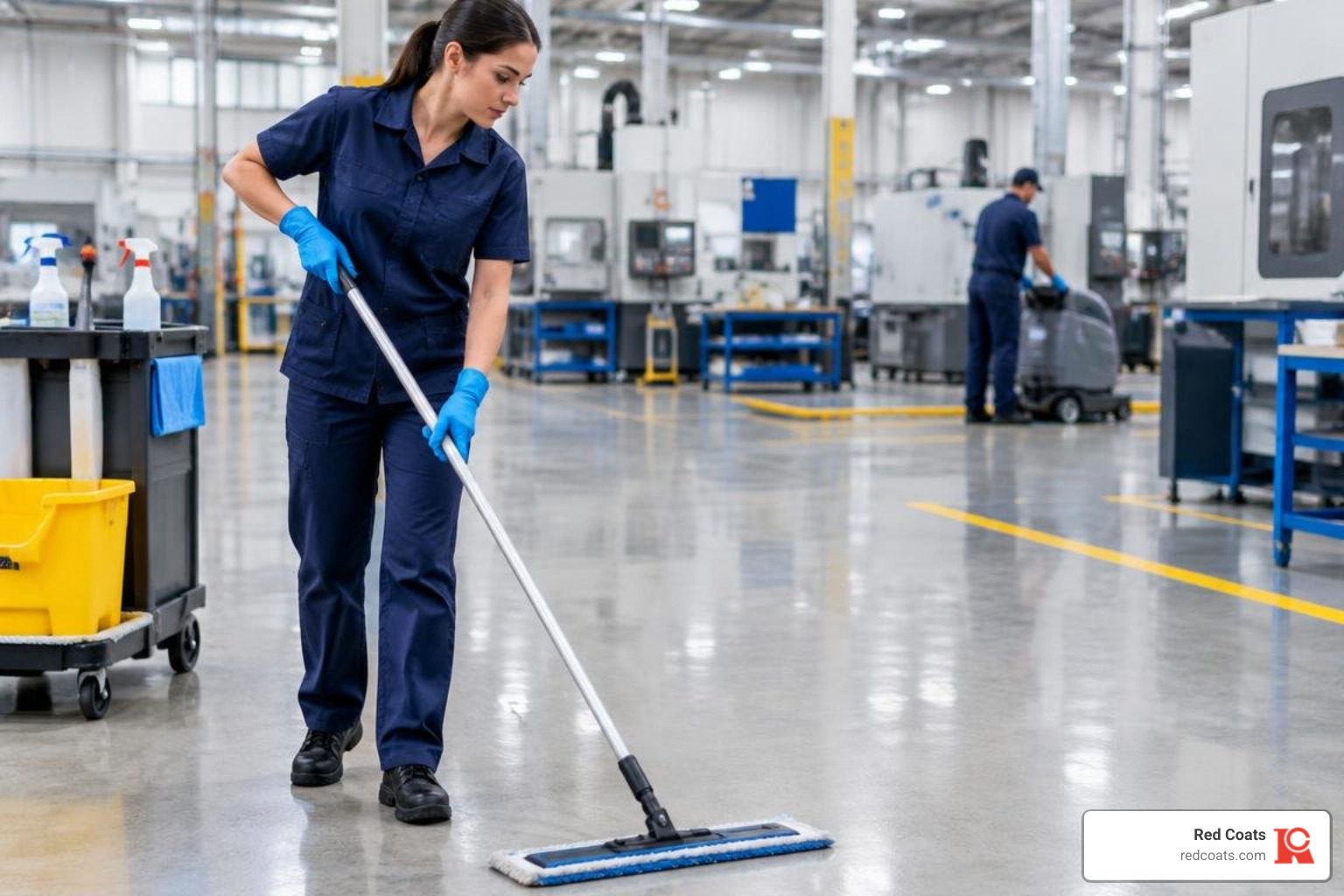
Choose a Cleaning Contract That Supports Safe, Productive Industrial Spaces
For a manufacturing facility or distribution center, choose a commercial cleaning contract that clearly defines the areas cleaned, service frequency, shift coverage, safety rules, quality checks, and response times. If your facility is expanding or being renovated, include a separate scope for construction site cleaning, such as dust containment, debris removal, floor care, and final handover cleaning.
A strong contract should help you:
- Keep production, warehouse, breakroom, restroom, and office areas clean without disrupting operations.
- Set measurable service levels for inspections, issue reporting, and urgent cleanup needs.
- Address safety risks, including slip hazards, dust, chemical handling, and waste segregation.
- Plan for periodic deep cleaning and post-renovation cleanup before work begins.
- Support sustainability goals through lower-impact products, waste reduction, and documented processes.
The right agreement is more than a task list. It gives facility managers a practical way to hold their cleaning provider accountable while protecting employees, visitors, inventory, and daily operations.
Red Coats has provided commercial cleaning and facility services for more than 60 years, supporting large commercial, industrial, and institutional properties across its service regions. Our experience with construction site cleaning and ongoing facility maintenance helps manufacturing and distribution clients build cleaning plans around real operating needs. For a broader look at how commercial cleaning supports safe, productive facilities, see the Occupational Safety and Health Administration guidance on workplace housekeeping.
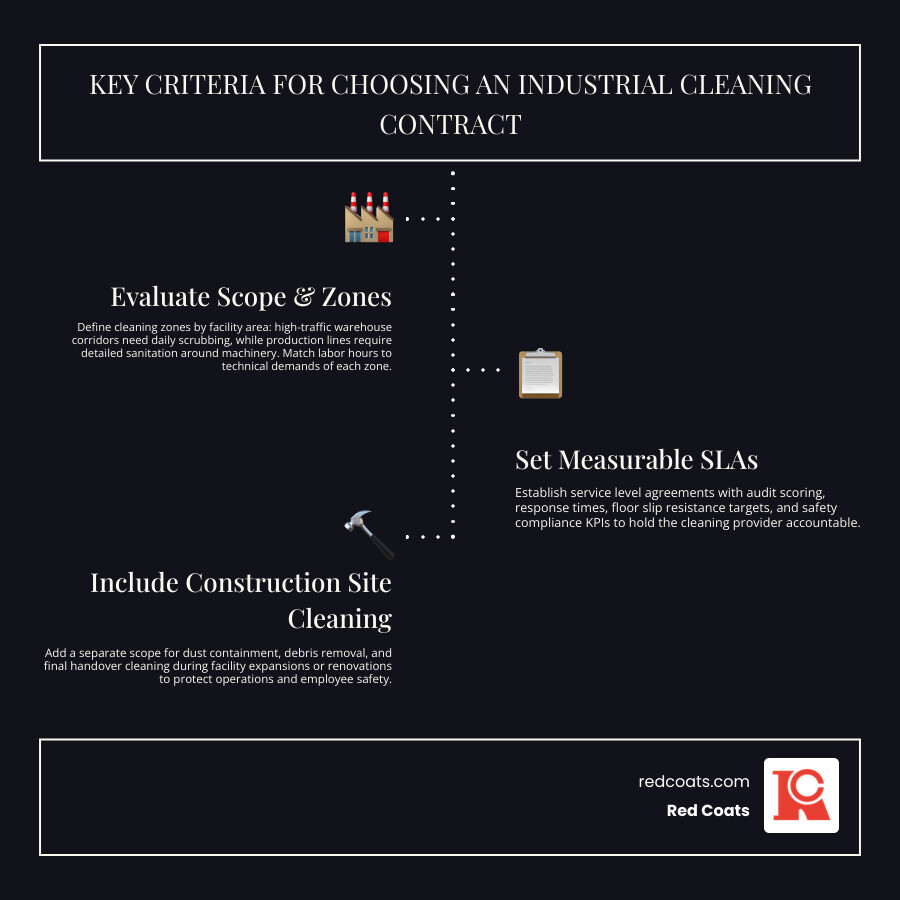
Evaluating Scope and Service Level Requirements for Industrial Plants
Industrial facilities operate on demanding schedules. Logistics hubs and manufacturing plants generate substantial dust, packaging scrap, and floor grime that commercial office cleaners rarely encounter. When choosing the right corporate cleaning company, you must ensure the statement of work reflects the physical realities of your space.
A thorough contract breaks down tasks by zone. High-traffic warehouse corridors require daily sweeping and auto-scrubbing to prevent forklift tire buildup, while production lines need detailed sanitation around machinery perimeters. Administrative suites and logistics control centers demand routine commercial janitorial services, such as surface dusting, trash removal, and interior glass polishing. Clear scope definitions ensure labor hours match the technical demands of each zone.
Daily Janitorial vs. Periodic Heavy-Duty Maintenance
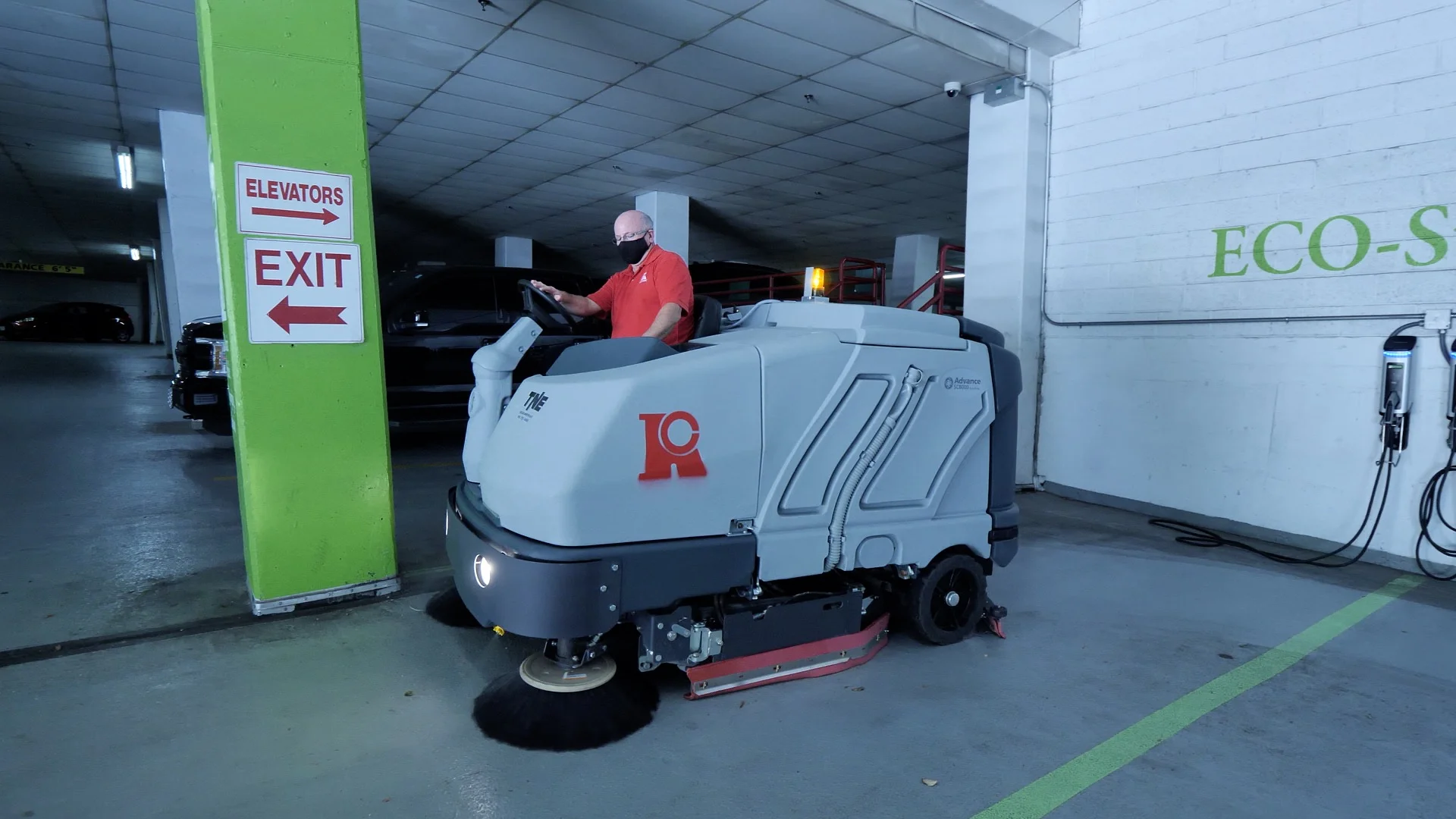
A balanced industrial cleaning contract distinguishes between recurring daily tasks and periodic heavy-duty maintenance. Daily janitorial care targets high-touch, high-traffic points to keep operations hygienic and safe.
- Restroom Sanitation: Continuous restocking and disinfecting to support multi-shift workforces.
- Breakrooms and Cafeterias: Degreasing tables, sanitizing food prep surfaces, and emptying high-volume waste receptacles.
- Production Perimeters: Manual sweeping and localized mopping around conveyor belts and assembly stations.
Periodic maintenance tasks require specialized equipment and scheduled downtime. These include deep auto-scrubbing of sealed concrete floors, overhead rafter dusting to eliminate accumulated particulate matter, and machine degreasing. Your contract should outline how these periodic tasks are scheduled, whether during planned maintenance shutdowns or weekend lulls, to avoid operational bottlenecks.
Compliance, Safety Certifications, and OSHA Regulations
Industrial plants are strictly regulated environments. An effective commercial cleaning partner must understand and comply with Occupational Safety and Health Administration (OSHA) regulations. Slips, trips, and falls represent a major portion of workplace injuries in logistics centers, making rapid spill response and proper floor drying protocols vital.
Contractors must maintain comprehensive Safety Data Sheet (SDS) binders on-site for every chemical used. Cleaning personnel must be fully trained in personal protective equipment (PPE) selection, chemical dilution control, and Lockout/Tagout (LOTO) awareness when working near operational machinery. By establishing compliance requirements in the initial contract, facility managers mitigate liability and protect workforce health.
Key Standards for Construction Site Cleaning in Industrial Facilities
Manufacturing plants and distribution centers frequently undergo capital improvements, such as installing automated sorting systems, expanding racking, or retrofitting cleanrooms. Construction dust and debris can easily migrate into active production zones, contaminating sensitive inventory and threatening machinery. This makes trusting the pros for your after builders clean critical to keeping operations online during facility upgrades.
The operational difference between routine maintenance and post-renovation cleanup requires distinct management protocols:
| Feature | Routine Industrial Cleaning | Post-Construction Site Cleaning |
|---|---|---|
| Primary Goal | Operational hygiene and slip prevention | Fine dust containment, residue removal, and safety clearance |
| Key Equipment | Standard auto-scrubbers, microfibers, wet mops | HEPA air scrubbers, heavy debris vacuums, floor strippers |
| Safety Focus | Daily spill mitigation, pathway clearance | Silica dust control, hazardous sharp removal, LOTO zones |
| Scheduling | Set shift intervals (daily, weekly) | Phased milestones (rough, prep, final handover) |
| Labor Profile | Dedicated facility janitorial staff | Specialized post-construction crews with rapid surge capacity |
Phased Construction Site Cleaning for Warehouse Expansions
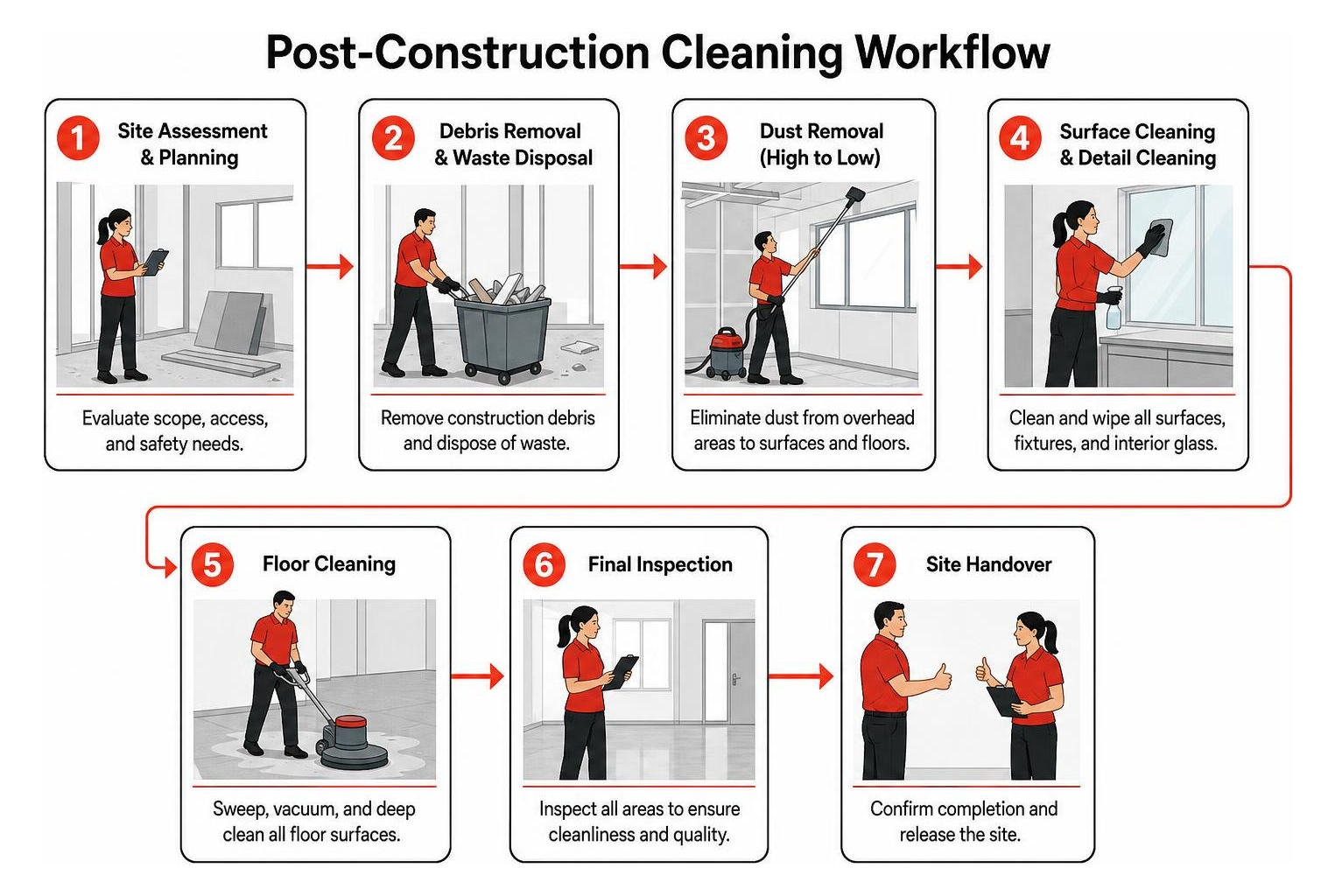
When executing an internal warehouse expansion, cleaning should follow a phased methodology rather than a single visit after contractors leave.
- Rough Clean: Removal of large construction debris, framing cutoffs, and packaging materials. This stage clears pathways for mechanical, electrical, and plumbing trades.
- Prep Clean: Targeted dust extraction once drywalling, flooring, and masonry are finished. Industrial HEPA vacuums and air scrubbers capture airborne silica dust before it settles into active logistics zones.
- Final Detail Clean: Meticulous top-to-bottom sanitization. Crews scrub and burnish concrete floors, wipe down light fixtures, sanitize walls, and polish interior glass, partition windows, and entrance doors.
Post-Renovation Construction Site Cleaning and Debris Management
After heavy construction ends, concrete slurry, adhesive overspray, and fine particulates remain embedded in concrete pores. Hiring reliable builders clean services ensures that industrial surfaces receive appropriate chemical neutralizers, mechanical scrubbing, and protective sealants before operational handover.
Debris management must comply with regional environmental standards across jurisdictions like Maryland, Virginia, Washington DC, Florida, North Carolina, South Carolina, and Texas. A compliant provider sorts recyclable metals and cardboard from general waste, documents proper disposal streams, and leaves the industrial space ready for racking installation and immediate occupancy.
Essential Contract Terms and Vendor Evaluation Criteria
A successful facility services contract relies on clear, enforceable business terms. Contracts should include detailed Service Level Agreements (SLAs) with specific performance indicators, response windows for emergencies, and transparent pricing structures.
When reviewing proposals, confirm that the vendor carries adequate general liability and workers’ compensation coverage tailored to large industrial plants. Transparent pricing models (fixed monthly base rates with clearly defined hourly rates for emergency calls or specialty floor care) prevent budget surprises.
Staffing Capacity and Rapid Response Flexibility
Distribution centers and manufacturing plants run on non-stop schedules. Cleaning contracts must account for multi-shift coverage that keeps restrooms and breakrooms pristine during shift turnovers.
Your cleaning partner needs deep labor surge capacity to respond immediately to unexpected production spills, weather events, or accelerated construction timelines. Comprehensive background checks, drug screenings, and standardized safety onboarding should be mandatory contract terms for all assigned personnel.
Sustainability and Green Cleaning Capabilities
Environmental stewardship is increasingly vital for modern supply chain operations. Sustainable cleaning contracts protect indoor air quality and reduce chemical exposure for your plant workforce without sacrificing cleaning efficacy.
Red Coats offers Global Care, our Green Seal GS-42 Certified Cleaning Program. It is designed to comply with standards established by the U.S. Green Building Council (USGBC), and it has helped clients obtain LEED, Fitwel, and WELL certifications for their properties. Green industrial contracts should mandate:
- High-efficiency particulate air (HEPA) filtration on all commercial vacuums and sweepers.
- Green Seal or UL ECOLOGO certified neutral detergents that minimize volatile organic compounds (VOCs).
- Concentrated chemical dilution systems to cut single-use plastic waste.
- Microfiber systems that maximize dirt capture while reducing water consumption.
Frequently Asked Questions About Industrial Cleaning Contracts
How do contracts accommodate ongoing facility modifications and construction site cleaning?
Industrial contracts accommodate renovations through project-based addendums. Rather than renegotiating the core janitorial contract, facility managers can establish predefined unit rates or scope tiers for post-construction phases. This allows the cleaning provider to deploy specialized teams equipped with HEPA dust containment tools and concrete scrubbers as construction milestones finish, ensuring clean spaces ready for final handover without disrupting routine facility maintenance.
What metrics should be tracked in a distribution center cleaning SLA?
A robust industrial cleaning SLA tracks clear, objective metrics:
- Audit Inspection Scores: Regular joint walkthrough scores evaluating floor cleanliness, restroom hygiene, and waste removal.
- Urgent Response Times: Time elapsed from reporting a production spill to full cleanup and safety sign-off.
- Safety Compliance: Verification of 100% up-to-date SDS sheets, PPE usage, and zero cleaning-related OSHA recordable incidents.
- Floor Slip Resistance: Periodic coefficient of friction testing on high-traffic corridors to confirm slip-and-fall prevention standards.
How does green cleaning benefit manufacturing and logistics facilities?
Green cleaning significantly improves indoor air quality by removing harsh aerosols, caustics, and high-VOC solvents from the facility. In enclosed distribution centers where hundreds of employees work alongside heavy equipment, cleaner air reduces respiratory irritation, lowers absenteeism, and supports employee retention. Additionally, utilizing certified green cleaning processes aligns your facility with corporate environmental, social, and governance (ESG) targets and supports green building certifications.
Conclusion
Selecting the right commercial cleaning contract for your manufacturing facility or distribution center safeguards operational continuity, employee health, and asset longevity. By defining clear scopes of work, integrating phased protocols for renovations, and demanding rigorous safety compliance, you turn your cleaning program into an operational asset.
For more than six decades, Red Coats has delivered dependable, professional commercial cleaning solutions tailored to the needs of complex industrial and logistics spaces. Global Care is Red Coats’ Green Seal GS-42 Certified Cleaning Program, designed to comply with standards established by the U.S. Green Building Council (USGBC), and it has helped clients obtain LEED, Fitwel, and WELL certifications for their properties. To build a reliable cleaning program for your industrial site, explore customized commercial cleaning and facility services tailored to your operational goals.