

Why Green-Seal Certified Cleaning Companies Are Transforming Commercial Facility Health
Red Coats is shaping how facility managers think about indoor air quality, occupant health, and environmental responsibility in commercial buildings.
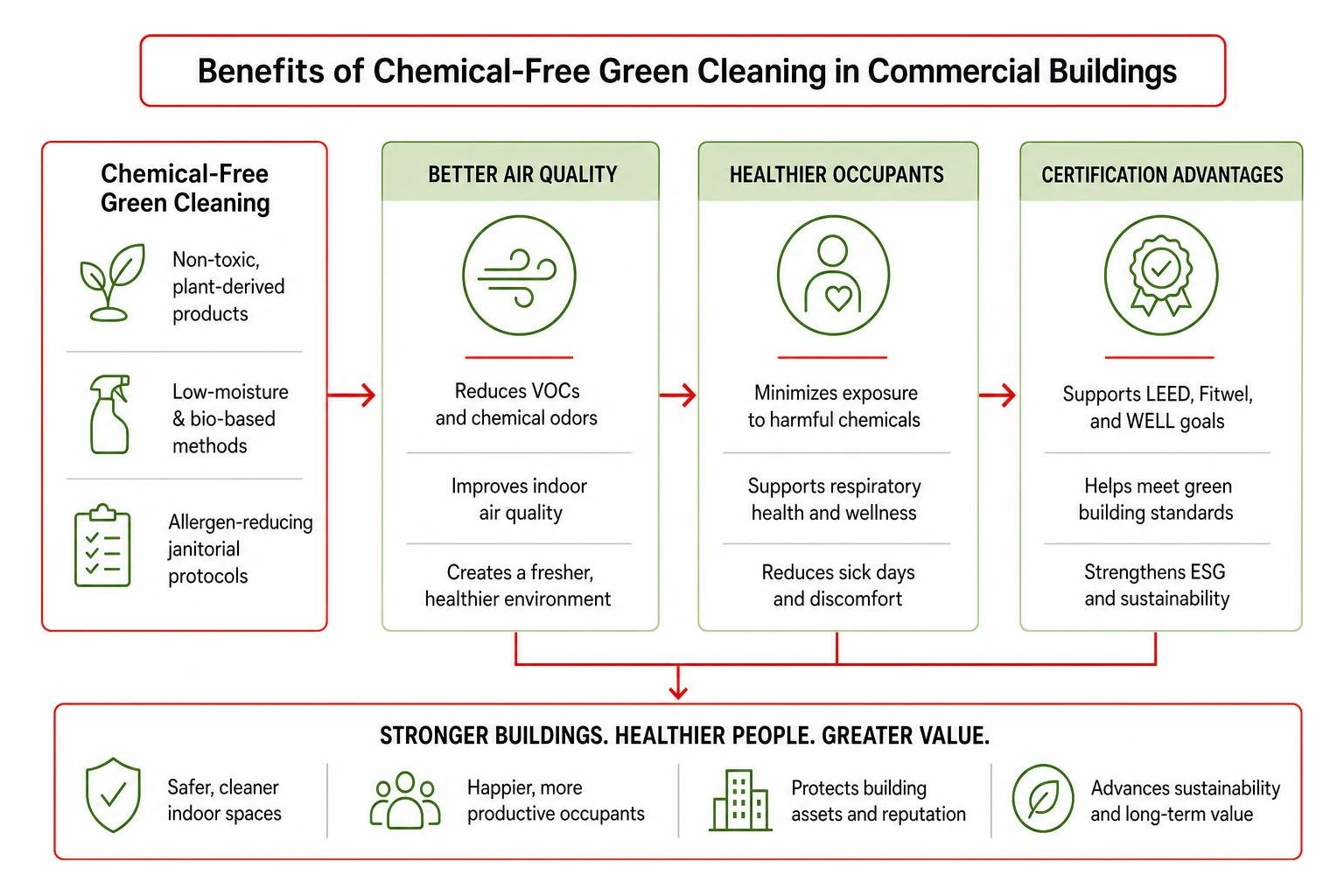
Here is a quick overview of what green cleaning means for commercial facilities:
- What it is: Cleaning with non-toxic, plant-derived products that reduce chemical exposure indoors
- Why it matters: Conventional cleaning products can make indoor air significantly more toxic than outdoor air
- Who benefits: Employees, building occupants, and anyone with allergies, asthma, or chemical sensitivities
- Key methods: Low-moisture carpet care, bio-based surface disinfection, and allergen-reducing janitorial protocols
- Certifications to look for: Green Seal GS-42, and programs aligned with USGBC standards for LEED, Fitwel, and WELL
Most facility managers assume a clean-smelling building is a safe one. But many traditional janitorial products release volatile organic compounds (VOCs) that linger in the air long after the cleaning crew has left. The result is a space that looks clean but quietly undermines the health of everyone inside.
Green cleaning solves this by replacing harsh chemical formulas with biodegradable, non-toxic alternatives that are just as effective, without the hidden costs to occupant health and building certification goals.
Red Coats has been a trusted commercial cleaning and facility services partner since 1960, serving over 175 million square feet daily across the DC metro and Southeast US, with deep expertise in Green Seal certified standards and environmentally responsible janitorial programs. Our Global Care program is Green Seal GS-42 certified and has helped clients achieve LEED, Fitwel, and WELL certifications for their properties. In the sections ahead, we break down exactly how to bring these standards into your facility.
Relevant articles:
- all green carpet & upholstery cleaning services
- ecofriendly carpet & upholstery cleaning
- green cleaning services
The Core Principles of Green Clean Solutions
When property managers ask us what defines a Green Seal certified cleaning approach, we point directly to chemistry and air quality. Traditional janitorial formulations often rely on caustic synthetic solvents, high-soda degreasers, and artificial fragrances designed to mask odors. These ingredients release volatile organic compounds (VOCs) into closed HVAC systems. In fact, research indicates that routine reliance on traditional chemical cleaners can leave indoor air up to 70% more toxic than outdoor air.
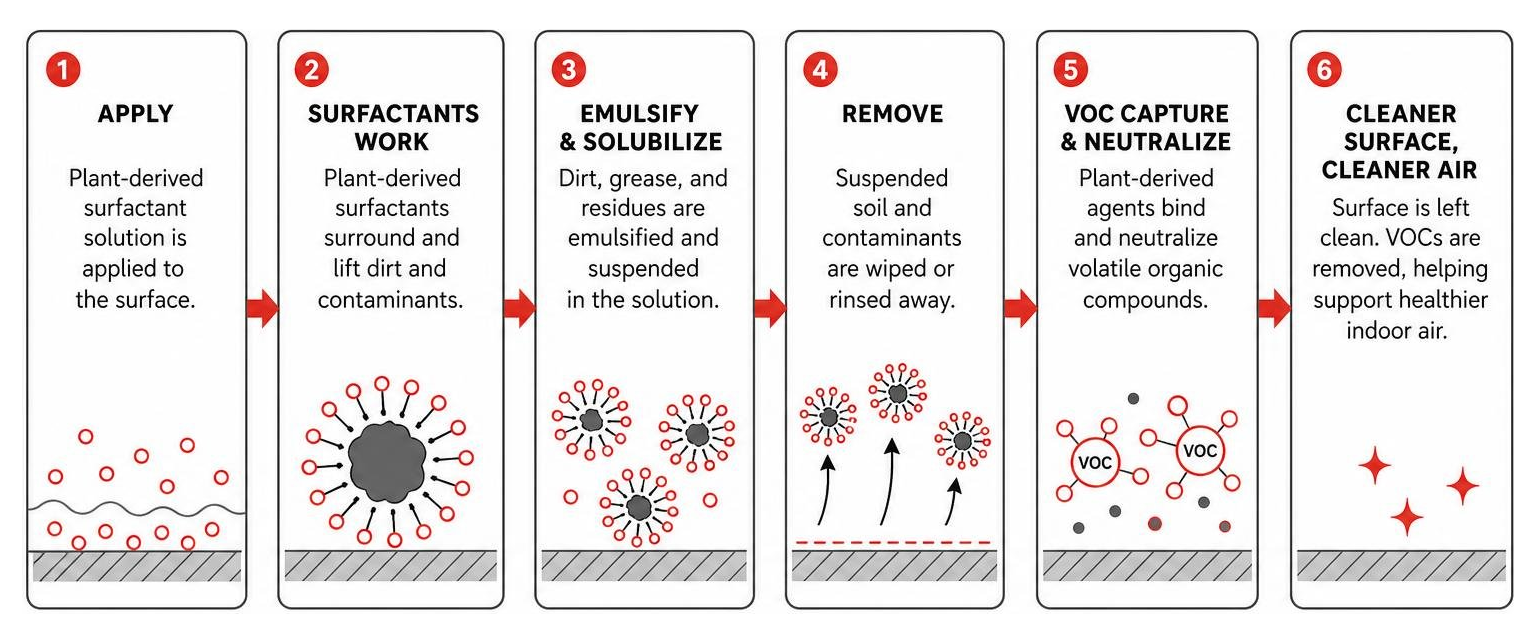
Adopting certified green cleaning principles means replacing hazardous chemicals with plant-derived surfactants and biodegradable agents. Surfactants derived from renewable plant materials lower surface tension, allowing water to lift dirt, grease, and microbial residue naturally without corroding surfaces or emitting dangerous chemical vapors.
Essential Elements of Natural Disinfection
Commercial sanitization does not require overwhelming synthetic odors to be effective. Incorporating bio-based surfactants and therapeutic botanical ingredients allows commercial janitorial teams to neutralize pathogens safely. Plant-based solutions break down organic matter on high-touch surfaces like door hardware, elevator buttons, and breakroom counters without leaving toxic film behind.
By focusing on Eco-Friendly Office Disinfection Options, facility managers can protect occupant wellness while eliminating lingering chemical vapors that irritate the lungs of building staff and visitors.
Implementing Green Seal Certified Protocols for Facility Health
Implementing certified green cleaning workflows across corporate office buildings requires standardized tools and non-toxic supplies. Microfiber cleaning technology plays a pivotal role here. Microfiber cloths and mop pads feature split fibers that physically trap up to 99% of surface bacteria and fine dust particulates using static electricity and mechanical action alone.
When paired with hypoallergenic cleaning solutions, microfiber systems allow our teams to maintain clean office environments without heavy chemical loads. This dramatically reduces airborne allergens, protects building maintenance staff from chemical exposure, and ensures that sensitive occupants can work without allergic reactions or headaches.
Eco-Friendly Carpet and Surface Care in Commercial Buildings
Commercial flooring endures constant foot traffic, tracked-in soil, and spill hazards. Traditional carpet cleaning often relies on hot-water extraction using heavy detergents. This approach drenches carpet backing, leading to long drying times that can breed mold and mildew inside corporate facilities.

By contrast, modern green carpet care utilizes low-moisture extraction techniques. Low-moisture carpet systems encapsulate dirt particles into microscopic crystals using plant-based cleaning solutions, which are then easily vacuumed away.
This low-moisture approach provides several key operational benefits:
- Fast drying times: Carpets dry completely in approximately 90 minutes, allowing office spaces to resume normal operations almost immediately without disruption.
- Reduced chemical exposure: Occupants are not exposed to lingering detergent residues or synthetic perfume vapors.
- Extended carpet fiber longevity: Avoiding over-saturation prevents carpet backing degradation, seam separation, and premature color fading.
To review complete guidelines on maintaining corporate textiles sustainably, read our Complete Guide to Green Carpet Care and explore our insights on Ecofriendly Carpet & Upholstery Cleaning.
Transitioning to Green Seal Certified Building Standards
Extending green standards across all textile surfaces requires dedicated upholstery preservation and targeted stain remediation strategies. Organic stains, ground-in mud, and spill marks on office lobby seating can be remediated without relying on harsh bleaching agents or petroleum-based solvents.
Biodegradable, bio-based spot cleaners target organic protein bonds directly. They break down stains at the molecular level without destroying fabric weaves or leaving sticky detergent residues behind. Zero-residue cleaning ensures that office furniture remains cleaner for longer periods because no chemical residue remains to attract fresh dirt particles.
Protecting Facility Glass and Interior Fixtures
Maintaining interior glass, lobby doors, glass office partitions, display cases, and mirrors is essential for a crisp corporate aesthetic. Traditional glass cleaners frequently contain ammonia, which releases sharp chemical fumes and can strip protective coatings off surrounding fixture trim over time.
Our certified green cleaning glass maintenance protocols utilize streak-free, alcohol-free, and ammonia-free plant formulations paired with fine-weave microfiber glass cloths. This combination effortlessly removes fingerprints, smudges, and atmospheric dust while preserving interior air quality and protecting nearby frame finishes.
Business Benefits of Green Cleaning Certifications
For commercial building owners, adopting green janitorial strategies delivers measurable economic and operational value. Sustainable building management is no longer just a trend, it is a primary requirement for tenant attraction and retention.
Partnering with a service provider that utilizes a Green Seal GS-42 certified cleaning program, such as Red Coats Global Care, provides verifiable proof that your property adheres to rigorous environmental and operational standards.
Global Care is designed to comply with standards established by the U.S. Green Building Council (USGBC). Implementing these practices helps building management teams earn valuable points toward LEED certification, as well as health-focused building accreditations like Fitwel and WELL. Furthermore, regional environmental standards, such as the Virginia Green and Clean Initiative, reinforce the regional momentum toward sustainable commercial land and facility stewardship.
To understand how green facility certifications enhance tenant satisfaction and marketability, read Why Green Certified Cleaners Benefit Businesses.
The comparison table below illustrates the operational differences between standard chemical cleaning formulations and eco-friendly commercial alternatives:
| Property / Feature | Traditional Commercial Cleaners | Eco-Friendly Green Clean Formulas |
|---|---|---|
| Primary Active Ingredients | Petroleum solvents, ammonia, chlorine, synthetic perfumes | Plant-derived surfactants, bio-based agents |
| Impact on Indoor Air Quality | High VOC emissions, airborne lung irritants | Zero or low VOC emissions, hypoallergenic |
| Drying Time (Carpet Care) | 12 to 24 hours (hot water extraction) | Approximately 90 minutes (low-moisture method) |
| Impact on Building Surfaces | Can strip finishes, corrode metal trim over time | Non-corrosive, preserves surface integrity |
| USGBC LEED / WELL Alignment | Rarely meets environmental indoor air guidelines | Directly supports LEED, WELL, and Fitwel credits |
| Workplace Safety | Requires extensive PPE, high chemical handling risk | Safe for janitorial staff and building occupants |
Best Practices for Transitioning Facility Cleaning Services
Transitioning a commercial facility from traditional cleaning methods to a non-toxic certified green cleaning program requires a structured approach. Property managers must balance daily office routines with the deployment of new janitorial workflows and procurement standards.
Follow these steps to audit and transition your facility cleaning practices seamlessly:
- Conduct a facility chemical audit: Review all existing janitorial closets to identify products containing high VOCs, ammonia, synthetic fragrances, or bleach, and target them for phase-out.
- Upgrade cleaning hardware: Replace standard cotton mops and string dusters with color-coded, high-efficiency microfiber cloths and mops that reduce water usage and eliminate cross-contamination.
- Establish low-moisture carpet protocols: Schedule regular low-moisture encapsulation extraction for high-traffic corridors to preserve carpet fibers and maintain short dry times.
- Update Service Level Agreements (SLAs): Specify non-toxic, bio-based cleaning chemistry and Green Seal GS-42 standards directly in your commercial janitorial contracts.
- Implement green procurement controls: Ensure all hand soaps, paper products, and multi-surface concentrates meet third-party environmental sustainability criteria.
- Train janitorial personnel: Educate facility staff on correct dilution ratios, dwell times, and ergonomic microfiber techniques to maximize cleaning efficiency without wasting products.
For a comprehensive guide on initiating green facility services for the first time, read our Beginner Guide to Green Commercial Cleaning.
Frequently Asked Questions About Green Cleaning
What makes commercial cleaning products truly non-toxic?
A commercial cleaning product is truly non-toxic when its primary cleaning agents are derived from natural, renewable plant sources rather than synthetic petroleum distillates. Non-toxic formulas are fully biodegradable, hypoallergenic, and free from volatile organic compounds (VOCs), phthalates, chlorine, ammonia, and heavy metals. They effectively lift soil and degrease surfaces without emitting dangerous airborne chemical vapors or leaving hazardous chemical residues on high-touch fixtures.
How do low-moisture carpet methods improve indoor air quality?
Low-moisture carpet methods enhance indoor air quality by preventing excessive dampness in carpet backings and underlayments. Traditional steam cleaning methods drench carpet fibers, creating moist environments that foster mold, mildew, and bacterial growth within the flooring assembly. Low-moisture encapsulation technology uses minimal liquid, allowing carpets to dry in approximately 90 minutes. This eliminates trapped dampness, traps fine dust allergens, and prevents mold spores from circulating into the building HVAC system.
Can green janitorial services help properties qualify for LEED points?
Yes, hiring a green certified janitorial provider directly supports property owners in securing credits for LEED (Leadership in Energy and Environmental Design) certification, specifically within the Building Operations and Maintenance (O+M) rating system. Programs like Red Coats Global Care align with USGBC standards for indoor environmental quality, green purchasing, and facility maintenance protocols. Utilizing these structured green cleaning methods also helps properties fulfill requirements for WELL and Fitwel building standards.
Conclusion
Transitioning your commercial property to a certified green cleaning operational standard is one of the most effective steps you can take to protect occupant health, optimize indoor air quality, and elevate your facility’s long-term market value. Moving away from harsh chemical formulations and high-VOC products creates a safer, healthier workplace environment while supporting corporate wellness initiatives.
Since 1960, Red Coats has delivered high-standard commercial cleaning across office buildings, corporate headquarters, medical facilities, and educational institutions. Our Global Care program is a Green Seal GS-42 certified cleaning program designed to comply with USGBC standards, helping building owners and property managers earn LEED, Fitwel, and WELL certifications across DC, Maryland, Virginia, North Carolina, South Carolina, Florida, and Texas.
Ready to elevate your property with environmentally responsible janitorial care? Explore our comprehensive line of Commercial Cleaning and Facility Services or contact the Red Coats team today to request a custom facility proposal.