

Choosing a Commercial Concrete Floor Cleaner
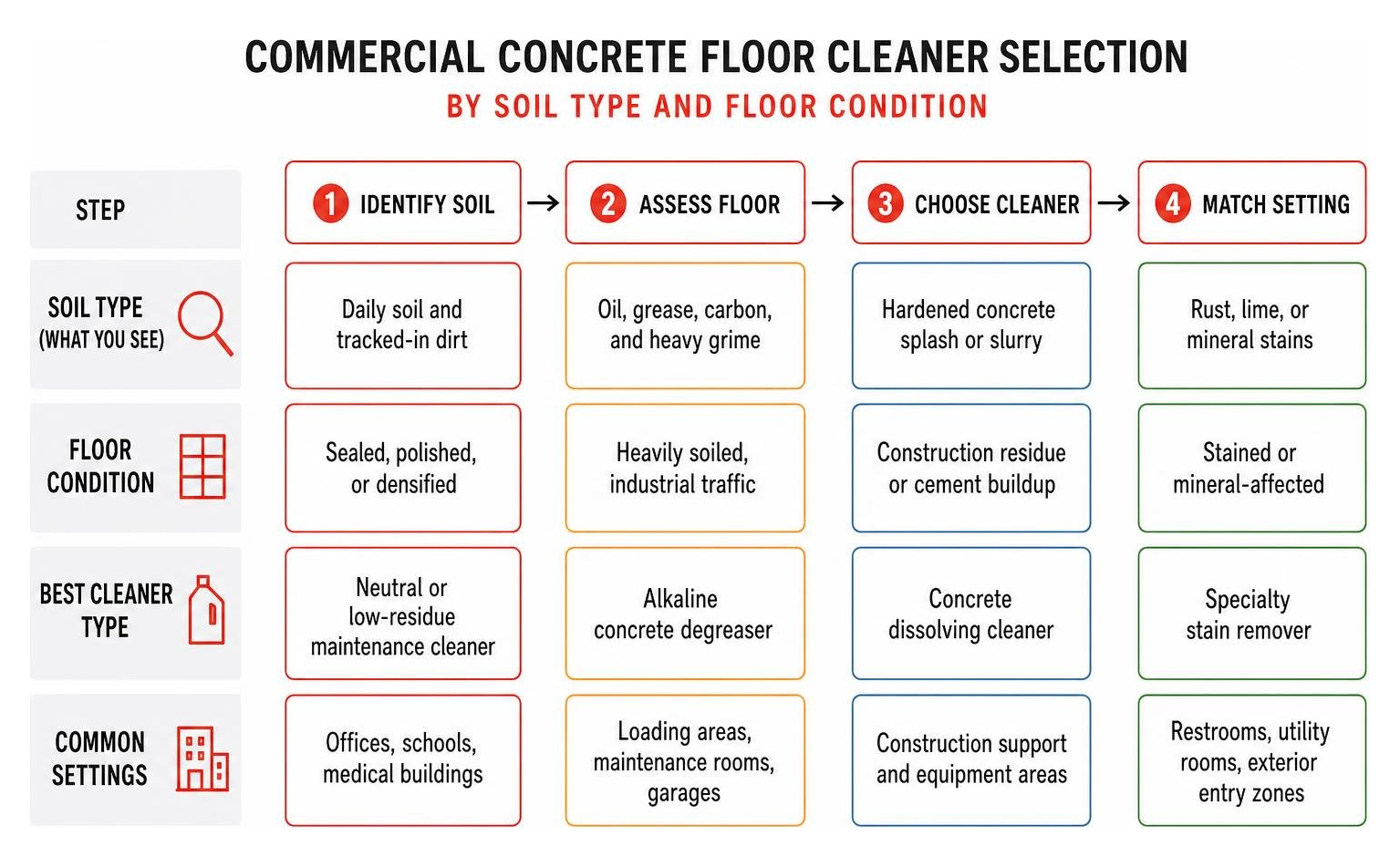
A commercial concrete floor cleaner should match the floor’s finish and the soil you need to remove. For routine care on sealed, polished, or densified concrete, choose a low-residue cleaner made for automatic scrubbers. For oil, grease, ink, and ground-in dirt, use a heavy-duty alkaline degreaser. For hardened concrete buildup on tools or equipment, use a dedicated concrete dissolving cleaner, not a daily floor detergent.
| Cleaning need | Best cleaner type | Common commercial setting |
|---|---|---|
| Daily soil and tracked-in dirt | Neutral or low-residue maintenance cleaner | Offices, schools, medical buildings |
| Oil, grease, carbon, and heavy grime | Alkaline concrete degreaser | Loading areas, maintenance rooms, garages |
| Hardened concrete splash or slurry | Concrete dissolving cleaner | Construction support and equipment areas |
| Rust, lime, or mineral stains | Specialty stain remover | Restrooms, utility rooms, exterior entry zones |
Concrete is porous, and traffic carries in grit that can leave fine scratches and dull the surface over time. The right chemical, brush, and machine help remove soil without leaving slippery residue, damaging a protective treatment, or wasting product through over-dilution.
At Red Coats, we clean approximately 175 million square feet of commercial, institutional, and industrial space each day. Our experience with commercial concrete floor cleaner selection and floor-care programs helps facilities protect appearance, safety, and long-term surface performance.
Selecting the Right Commercial Concrete Floor Cleaner Chemical Formulations
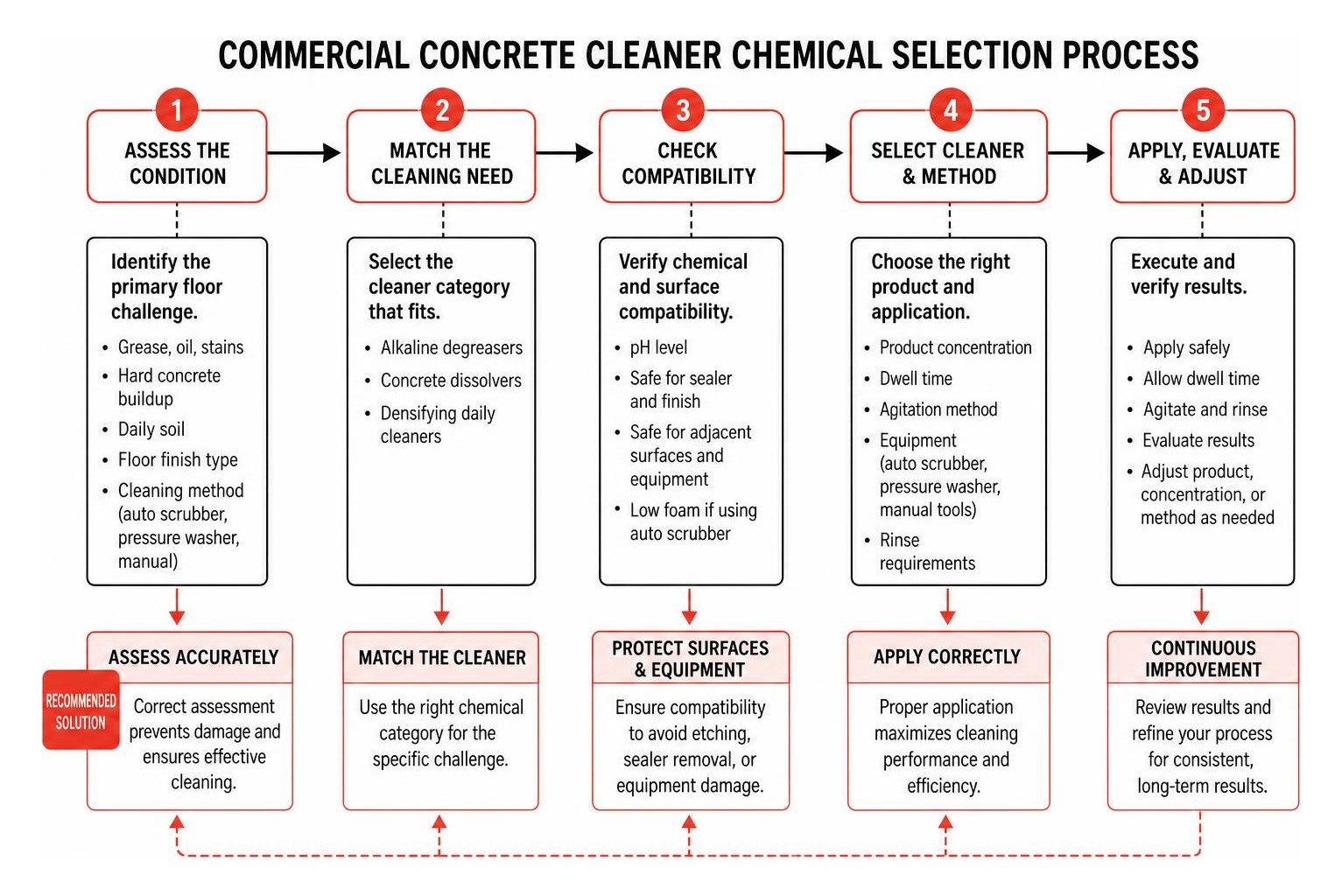
Choosing the correct chemical solution requires understanding concrete’s unique chemistry. Because concrete is porous and inherently alkaline, using the wrong chemical pH level can strip surface sealers, cause acid etching, or leave greasy surfactant films that capture more dirt.
Foot traffic in a busy commercial facility brings in grit and abrasive particles. In fact, foot traffic alone can introduce over 1.2 pounds of dirt per week for every thousand visitors. When ground into unfinished or polished concrete, this grit acts like sandpaper, creating microscopic scratches that destroy shine and hold onto soil. Selecting specialized chemical formulas ensures deep cleaning without stripping protective treatments.
Alkaline Degreasers vs. General-Purpose Industrial Cleaners
When dealing with severe petroleum stains, heavy motor oil, asphalt, tar, or carbonized deposits, standard multi-surface neutral detergents fall short. Industrial facilities require heavy-duty alkaline formulations. Highly alkaline industrial concrete floor cleaners emulsify fats, oils, and industrial grease, lifting them out of concrete pores so auto scrubbers can pick them up completely.
For high-demand environments, facilities often rely on heavy-duty powdered alkaline detergents or concentrated liquid formulas. Heavy-duty powdered detergent formulations combine synthetic detergents with specialized solvents to penetrate deep into porous concrete and masonry without relying on harsh caustic soda. These heavy-duty industrial cleaners often feature low-foaming properties, which are critical for protecting automatic floor scrubber vacuum motors from foam backup and moisture damage.
When pressure washing exterior walkways, loading docks, or facility entryways, specialized liquid concrete cleaners provide an alkaline pH (around 10.4) that breaks down tough tar and grease while remaining safe for surrounding aluminum, glass, and painted surfaces.
Concrete Dissolving Cleaners and Heavy Buildup Removal
General floor detergents break down soft soils, but they cannot remove hardened concrete slurry, mortar splashes, or dry cementitious buildup left behind after renovation projects or maintenance work. Attempting to chip away hardened concrete using metal scrapers or wire brushes can permanently scratch or gouge the underlying floor.
In these situations, specialized concrete dissolving cleaners are required. Unlike aggressive muriatic acids, modern concrete dissolvers use organic synthetic acids or modified acid compounds. For example, high-performance concrete dissolvers are formulated to react chemically with calcium compounds in cured concrete, softening the hardened mass into a rinseable paste without destroying sensitive equipment, metal fixtures, or surrounding floor surfaces.
To use concrete dissolvers safely and effectively on heavy buildup, apply the liquid evenly and allow a dwell time of 15 to 30 minutes. Keep the surface moist during this chemical reaction step. Once the buildup softens, scrub the area with a stiff bristle non-metallic brush and rinse thoroughly with clear water.
Densifying and Hardening Daily Commercial Concrete Floor Cleaner Products
Polished concrete and lithium silicate-densified floors require a distinct maintenance approach. Standard acidic cleaners dull polished surfaces, while heavy alkaline degreasers can leave film behind that ruins clarity and gloss.
To preserve polished finishes, facilities utilize specialized daily maintenance cleaners that combine soil emulsifiers with reactive lithium silicate technology. Specialized reactive maintenance products clean away surface dirt while depositing micro-doses of lithium to harden concrete pores, boost gloss, and improve slip resistance. In fact, floor treatments tested under ANSI B101.1 wet test standards can earn National Floor Safety Institute (NFSI) High Traction certification, lowering slip-and-fall risks in commercial facilities.
For large automatic scrubbers, highly concentrated no-rinse neutral cleaners provide pre-measured dosing (such as 4 ounces per 30-gallon tank). Operating at a gentle pH near 7.8 with zero volatile organic compounds (VOCs), these formulations clean high-traffic polished concrete daily without clouding the floor’s reflectivity or requiring a secondary rinse cycle.
Equipment Selection: Manual Scrubbing Tools vs. Powered Floor Scrubbers
Pairing the right chemical solution with appropriate mechanical agitation is key to maintaining commercial concrete floors efficiently. Using manual mops and hand brushes over tens of thousands of square feet wastes labor hours and leaves suspended dirt in surface pores.
| Equipment Type | Best Facility Size | Key Advantages | Typical Price Range |
|---|---|---|---|
| Manual Brushes & Deck Scrubbers | Small zones (<1,000 sq ft) | Low upfront cost, tight space access | $20 – $80 |
| Handheld Electric Spin Scrubbers | Detail & restroom areas | Cordless convenience, saves physical effort | $60 – $200 |
| Orbital & Single-Disc Floor Buffers | Small to medium (1,000 – 5,000 sq ft) | Highly versatile, deep scrubbing & polishing | $800 – $2,500 |
| Compact Walk-Behind Scrubbers | Medium facilities (5,000 – 25,000 sq ft) | Cleans & dries floors in a single pass | $3,000 – $8,000 |
| Large Ride-On Auto Scrubbers | Large facilities (>25,000 sq ft) | Maximum coverage rate, reduces labor costs | $10,000 – $30,000+ |
Powered Floor Scrubbers vs. Handheld Commercial Concrete Floor Cleaner Machinery
Choosing between manual tools, orbital floor machines, walk-behind scrubbers, and ride-on units depends primarily on square footage, room layout, and available labor hours.
- Manual Scrubbing Tools: Deck brushes and squeegees work well for small localized spills or tight corners around machinery. However, manual mopping often re-deposits dirty water into concrete pores rather than extracting it.
- Handheld Electric Spin Scrubbers: Rechargeable spin scrubbers operate at high RPMs to tackle tight corners, expansion joints, baseboards, and small tile or concrete zones without physical strain.
- Orbital Floor Machines: Single-disc orbital cleaners (such as commercial orbiter floor machines) oscillate rapidly to lift ground-in dirt using minimal water and chemicals. They maneuver around furniture and fixtures, making them popular in retail spaces, classrooms, and corridors.
- Walk-Behind Automatic Scrubbers: Walk-behind scrubbers scrub the concrete with direct down-pressure, rinse the floor, and vacuum up liquid waste in a single pass. They offer an ideal balance of maneuverability and speed for medium-sized facilities.
- Ride-On Scrubber Machines: For expansive logistics centers, corporate facilities, or wide warehouse aisles, heavy-duty ride-on scrubbers deliver maximum cleaning speed and operator comfort. In high-demand facilities, utilizing industrial floor sweeper and scrubber rentals offers access to top-tier machinery without immediate capital equipment expenditures.
Matching Scrubber Brush Types to Concrete Surface Conditions
Using the wrong brush attachment can either fail to remove embedded grease or permanently damage delicate concrete sealers. Choosing the correct bristle material ensures effective cleaning and protects floor surfaces:
- Soft Nylon Bristles: Best for smooth polished concrete, decorative stained floors, or high-gloss epoxy coatings. They flex easily and clean surface dirt without dulling or scratching thin sealers.
- Polypropylene / Medium Stiff Bristles: The most versatile choice for general commercial concrete floor cleaning. Excellent for daily scrub routines on smooth or light broom-finished concrete.
- Abrasive Grit Brushes (Silicon Carbide Impregnated): Designed for unsealed industrial concrete, heavy grease accumulation, and rough surface profiles. Aggressive grit bristles cut through stubborn carbon, rubber tire marks, and heavy grime.
- Wire Bristle Brushes: Reserved exclusively for severe industrial restoration, heavy scale removal, or unsealed exterior concrete. Wire brushes should never be used on polished, stained, or sealed interior commercial floors, as they cut deep grooves into the surface.
Best Practices for Dilution, Application, and Floor Maintenance
Achieving pristine commercial concrete requires consistent chemical dilution, proper dwell time, and routine floor maintenance. Over-concentrating chemical solutions does not make floors cleaner. Instead, excess detergent leaves sticky chemical residues that trap fresh dirt rapidly, leading to fast re-soiling and potential slip hazards.
For broader facility surface care insights, review our complete guide on commercial tile maintenance standards.
Dilution Precision and Dwell Time Optimization
Commercial concrete cleaner concentrates are engineered for specific dilution ratios based on soil density:
- Light Soil / Daily Cleaning: Dilute at 1:20 to 1:30 (approximately 4 to 6 ounces of cleaner per gallon of water).
- Medium Commercial Soil: Dilute at 1:10 to 1:15 (approximately 8 to 12 ounces per gallon).
- Heavy Industrial Soil & Degreasing: Dilute at 1:5 (approximately 25 ounces per gallon).
To optimize chemical cleaning action, allow proper dwell time. Dwell time is the period a chemical solution remains wet on the floor surface to break down soils before scrubbing or vacuuming begins. For standard daily cleaning, a 2 to 3 minute dwell time during auto-scrubber operation works well. For heavy industrial grease, allow 10 to 15 minutes of dwell time while keeping the floor surface wet, preventing the solution from drying before the mechanical scrub cycle starts.
Always use low-foaming chemicals inside auto scrubbers. High-foaming detergents fill recovery tanks with foam, triggering automatic shut-off floats prematurely or blinding vacuum motors. When using alkaline degreasers on heavy soils, finish with a clean water rinse cycle to remove remaining surfactants before reopening the floor to foot traffic.
Routine Maintenance Schedules for Commercial Facilities
A structured floor maintenance schedule prevents deep soil accumulation and protects original floor investments.
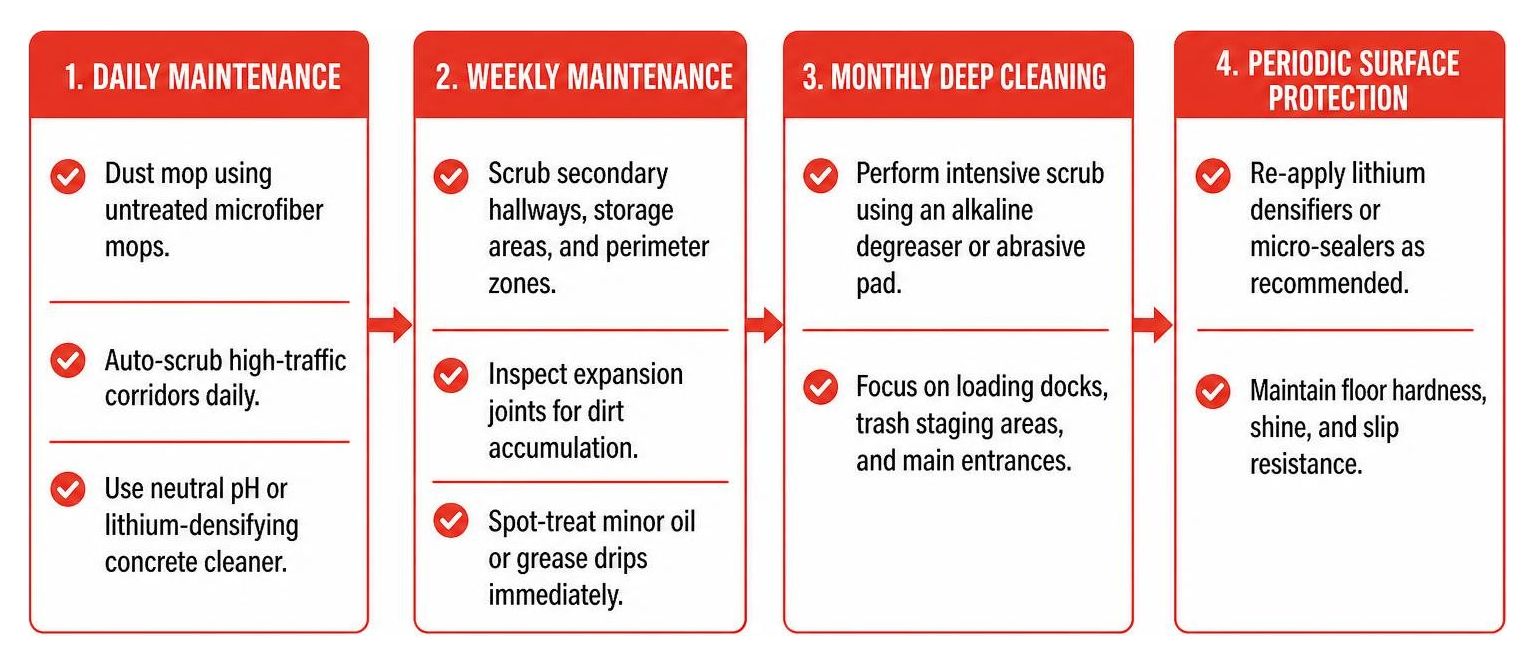
- Daily Maintenance: Dust mop concrete floors using untreated microfiber mops to capture ambient grit and silica dust. Auto-scrub high-traffic corridors daily using a neutral pH or lithium-densifying commercial concrete floor cleaner.
- Weekly Maintenance: Scrub secondary hallways, storage areas, and perimeter zones. Inspect expansion joints for dirt accumulation and spot-treat minor oil or grease drips immediately.
- Monthly Deep Cleaning: Perform an intensive scrub using an alkaline degreaser or abrasive pad on heavily used loading docks, trash staging areas, and main entrances.
- Periodic Surface Protection: Re-apply lithium densifiers or micro-sealers as recommended to maintain floor hardness, shine, and slip resistance. To evaluate your property’s professional floor care requirements, explore how to select corporate facility cleaning services.
Safety Guidelines, PPE, and Common Concrete Cleaning Mistakes
Industrial concrete cleaning products contain active chemical ingredients, including silicates, surfactants, builders, and organic solvents. Implementing proper safety protocols protects cleaning staff and building occupants while extending floor life.
For more information on facility safety protocols, consult our detailed resource on workplace safety cleaning protocols.
Essential Safety Precautions and Personal Protective Equipment (PPE)
Operating commercial floor scrubbers and handling industrial-strength chemicals requires proper personal protective equipment (PPE):
- Eye and Face Protection: Wear splash-proof chemical goggles or full face shields when measuring chemical concentrates or filling scrubber solution tanks.
- Hand Protection: Use durable nitrile, neoprene, or heavy rubber gloves when handling alkaline degreasers or concrete dissolving compounds.
- Safety Footwear: Require non-slip, chemical-resistant safety boots or shoe covers. Wet concrete floors during scrubbing cycles present temporary slip hazards.
- Ventilation Standards: Ensure indoor areas are adequately ventilated, particularly when using heavy solvent degreasers or concrete dissolvers in enclosed spaces.
- Safety Data Sheets (SDS): Maintain accessible Safety Data Sheets (SDS) for all chemical products kept on facility premises, ensuring compliance with the OSHA Hazard Communication Standard.
Common Mistakes to Avoid in Commercial Concrete Floor Care
Avoid these frequent errors when maintaining commercial concrete surfaces:
- Using Harsh Muriatic Acid on Interior Floors: Acid etching destroys the top cement paste layer, exposing raw aggregate, leaving permanent chalky white discoloration, and creating hyper-porous surfaces that trap dirt easily.
- Over-Concentrating Cleaning Solution: Adding extra chemical solution creates a sticky residue film that catches dust and makes floors slippery when damp.
- Selecting Inappropriate Scrubber Pads: Using aggressive abrasive grit pads on polished concrete strips away micro-topcoats, ruining surface reflectivity.
- Allowing Chemicals to Dry Prematurely: Allowing degreasers or concrete dissolvers to dry on the surface before scrubbing locks lifted soils back into porous concrete.
- Skipping Water Rinses After Heavy Degreasing: Failing to pick up dirty slurry completely leaves chemical salts behind, causing efflorescence or unsightly floor hazing.
Frequently Asked Questions About Concrete Floor Cleaning
What is the difference between an alkaline degreaser and a neutral concrete floor cleaner?
An alkaline degreaser features a high pH (typically between 10.0 and 13.0) formulated to break down, saponify, and lift heavy petroleum oils, animal fats, grease, and carbonized grime out of concrete pores. A neutral concrete floor cleaner operates at a mild pH (around 7.0 to 8.0) designed for daily removal of dust, light soils, and foot traffic dirt without disturbing concrete sealers, wax finishes, or polished concrete clarity.
How often should high-traffic commercial concrete floors be machine scrubbed?
High-traffic commercial concrete floors in main lobbies, retail concourses, healthcare corridors, and busy logistics facilities should be machine scrubbed daily using an automatic floor scrubber. Daily scrubbing removes abrasive grit before it causes fine surface scratches. Lower-traffic zones, such as secondary storage rooms or utility corridors, can be machine scrubbed on a weekly or bi-weekly schedule based on soil accumulation.
What safety gear is required when handling industrial concrete floor cleaning chemicals?
When mixing or handling concentrated industrial concrete cleaners, technicians should wear chemical splash goggles, durable nitrile or butyl rubber gloves, long-sleeved uniforms, and chemical-resistant slip-resistant footwear. When applying solvent-based or heavy alkaline products in enclosed or poorly ventilated areas, technicians must ensure adequate cross-ventilation or wear appropriate respiratory protection as directed by the product’s Safety Data Sheet (SDS).
Conclusion
Maintaining safe, durable, and clean concrete floors requires matching the right commercial concrete floor cleaner chemical formulation with proper machine down-pressure, brush selection, and routine care schedules. Whether managing polished concrete corridors, loading bays, or institutional facilities, routine care preserves structural integrity and surface appearance.
At Red Coats, we bring over 60 years of commercial cleaning expertise to facilities across Maryland, Virginia, Washington D.C., Florida, North Carolina, South Carolina, and Texas. Our Global Care cleaning program is Green Seal GS-42 Certified and designed to comply with standards established by the U.S. Green Building Council (USGBC), helping our partners achieve LEED, Fitwel, and WELL building certifications.
To learn more about our complete commercial floor care and janitorial maintenance capabilities, explore our complete commercial facility services today.